
How to Create Sight Word Worksheets in Seconds
Sight words are the building blocks of reading fluency. These high-frequency words appear so often in text that students need to recognize them instantly, without sounding them out. Whether you're teaching Dolch words, Fry words, or your own custom list, having the right worksheets makes all the difference.
In this guide, I'll show you how to create effective sight word worksheets using Worksheet Creator, explore the different types of worksheets that work best for sight word practice, and share research-backed strategies for teaching sight words effectively.
What Are Sight Words?
Sight words (also called high-frequency words) are words that appear frequently in written text and are essential for reading fluency. Many of these words don't follow regular phonics patterns, which is why they need to be memorized "by sight."
For example, words like the, said, was, they, and could appear in almost every sentence children read, but they can be difficult to decode using phonics rules alone. When students can recognize these words automatically, they can focus their cognitive energy on understanding the meaning of what they're reading rather than struggling to decode each word.
According to Science of Reading research, rapid word recognition is one of the key components of fluent reading. The more automatically students can recognize high-frequency words, the more mental resources they have available for comprehension.
Dolch Words vs. Fry Words: Understanding the Two Major Sight Word Lists
Two sight word lists have become the standard in classrooms: the Dolch Word List and the Fry Word List. Understanding the differences can help you choose the right words for your students.
Dolch Sight Words
Created by Dr. Edward William Dolch in 1936, the Dolch Word List contains 220 high-frequency words plus 95 common nouns. The words are organized into five levels:
- Pre-primer (40 words): a, and, away, big, blue, can, come, down, find, for, funny, go, help, here, I, in, is, it, jump, little, look, make, me, my, not, one, play, red, run, said, see, the, three, to, two, up, we, where, yellow, you
- Primer (52 words): all, am, are, at, ate, be, black, brown, but, came, did, do, eat, four, get, good, have, he, into, like, must, new, no, now, on, our, out, please, pretty, ran, ride, saw, say, she, so, soon, that, there, they, this, too, under, want, was, well, went, what, white, who, will, with, yes
- Grade 1 (41 words): after, again, an, any, as, ask, by, could, every, fly, from, give, going, had, has, her, him, his, how, just, know, let, live, may, of, old, once, open, over, put, round, some, stop, take, thank, them, then, think, walk, were, when
- Grade 2 (46 words): always, around, because, been, before, best, both, buy, call, cold, does, don't, fast, first, five, found, gave, goes, green, its, made, many, off, or, pull, read, right, sing, sit, sleep, tell, their, these, those, upon, us, use, very, wash, which, why, wish, work, would, write, your
- Grade 3 (41 words): about, better, bring, carry, clean, cut, done, draw, drink, eight, fall, far, full, got, grow, hold, hot, hurt, if, keep, kind, laugh, light, long, much, myself, never, only, own, pick, seven, shall, show, six, small, start, ten, today, together, try, warm
Fry High-Frequency Words
Dr. Edward Fry updated and expanded the concept in 1957 (revised in 1980), creating a list of 1,000 words organized into groups of 100. The first 300 Fry words account for approximately 65% of all written material. Here are the first 100:
- First 100 Fry Words: the, of, and, a, to, in, is, you, that, it, he, was, for, on, are, as, with, his, they, I, at, be, this, have, from, or, one, had, by, word, but, not, what, all, were, we, when, your, can, said, there, use, an, each, which, she, do, how, their, if, will, up, other, about, out, many, then, them, these, so, some, her, would, make, like, him, into, time, has, look, two, more, write, go, see, number, no, way, could, people, my, than, first, water, been, call, who, oil, its, now, find, long, down, day, did, get, come, made, may, part
Which List Should You Use?
Both lists are effective. The Dolch list is slightly older and focuses on function words (no nouns in the main list), while the Fry list is more comprehensive and includes some content words. Many teachers use Dolch words for kindergarten and first grade, then transition to Fry words for older students. The most important thing is consistency within your classroom or school.
Best Worksheet Types for Sight Word Practice
Different worksheet formats engage different learning modalities. Here are the most effective worksheet types for sight word practice, all available through Worksheet Creator:
1. Sight Word Hunt
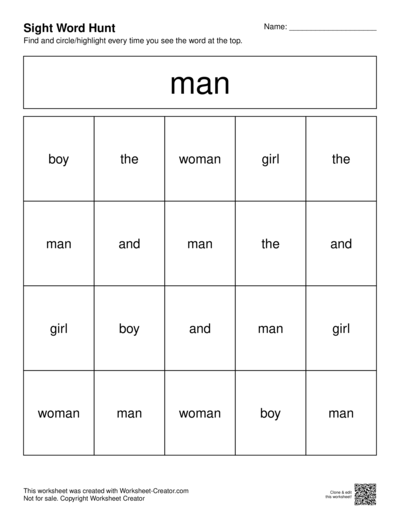
The Sight Word Hunt is the most direct format on this list: one focus word printed large at the top of the page, and a 5 x 4 grid of 20 words below it. Students hunt through the grid and circle or highlight the focus word every time they find it.
Because the other words in the grid come from your own list, you decide how hard the hunt is. Mixing their, there, and them into the grid forces students to look at every letter instead of guessing from the word's shape. It also works before students are reading whole words, for hunting a single letter among reversals like b, d, p, and q, or a number among other numbers.
2. Trace, Copy, Cover & Write
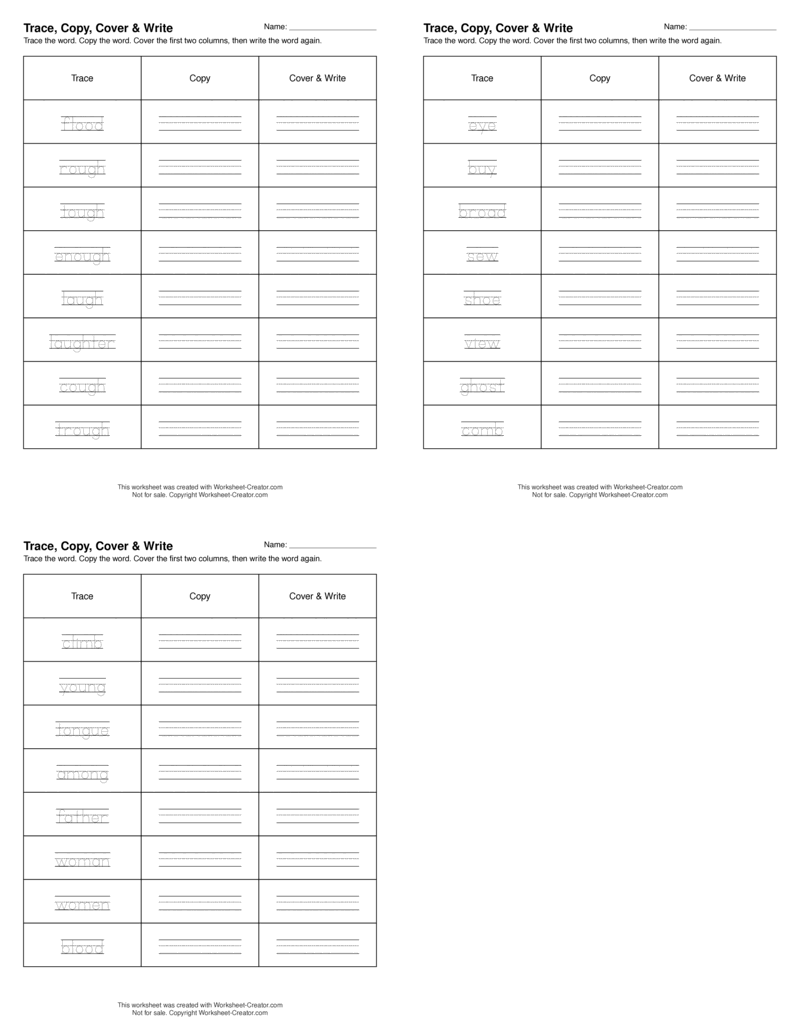
The Trace, Copy, Cover & Write method is one of the most research-supported approaches for learning sight words. Students:
- Trace the word while saying it aloud
- Copy the word while looking at the original
- Cover the first two columns
- Write the word from memory
This multi-sensory approach engages visual, auditory, and kinesthetic learning pathways, helping cement words in long-term memory.
3. Rainbow Words
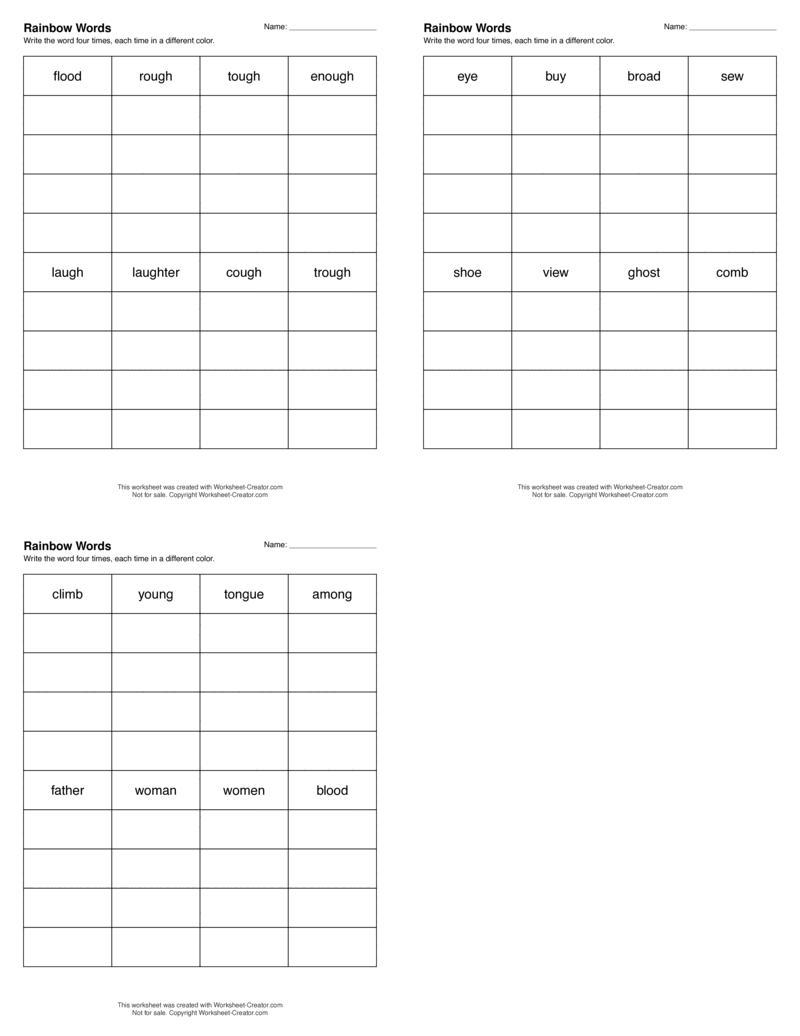
Rainbow Words worksheets make sight word practice engaging for younger learners. Students write each word multiple times, using a different colored pencil or crayon each time. The repetition builds muscle memory while the colors keep students motivated.
4. Bingo Cards
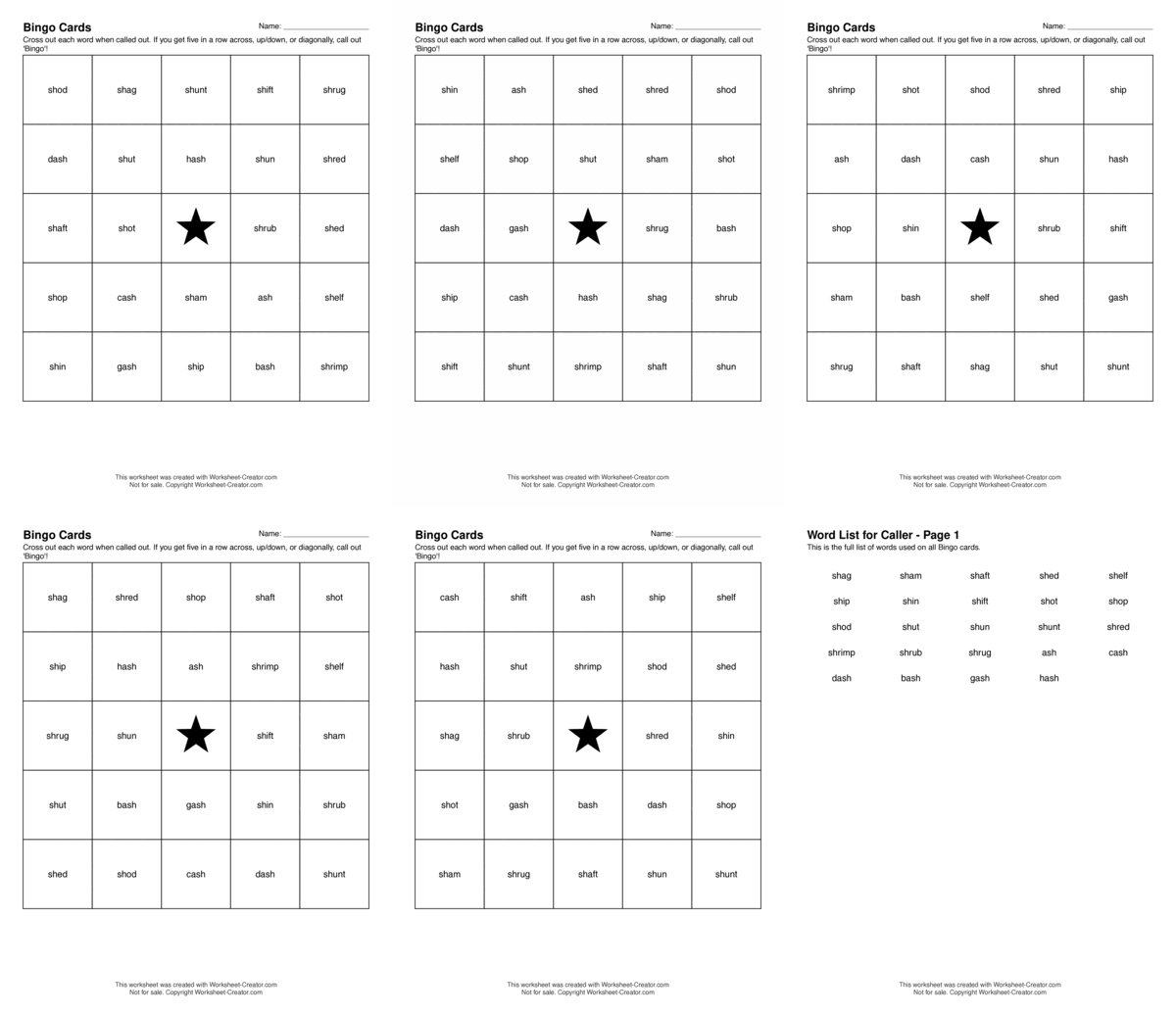
Sight Word Bingo turns practice into a game. When students hear a word called, they must quickly scan their card to find it, reinforcing instant recognition. Bingo is perfect for whole-class review, small group practice, or even homework with family members.
5. Missing Letters
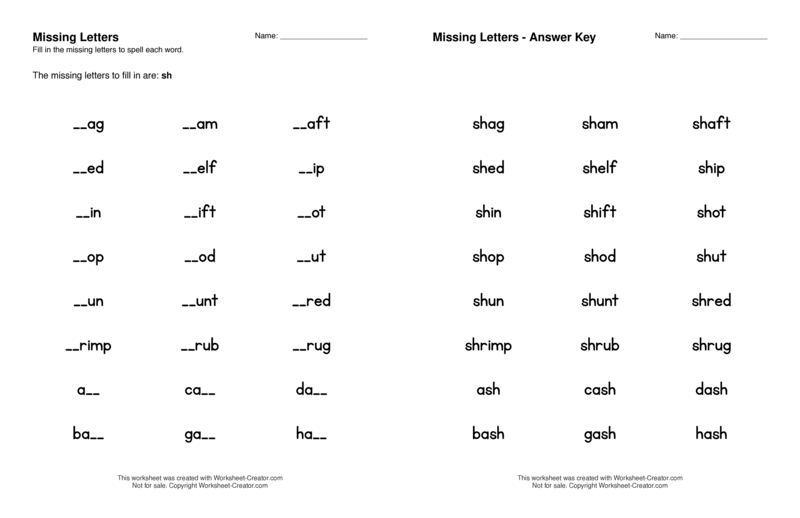
Missing Letters worksheets challenge students to complete partially spelled sight words. This format helps students focus on the specific letter patterns within each word, strengthening their spelling and word recognition skills.
6. Word Search Puzzles
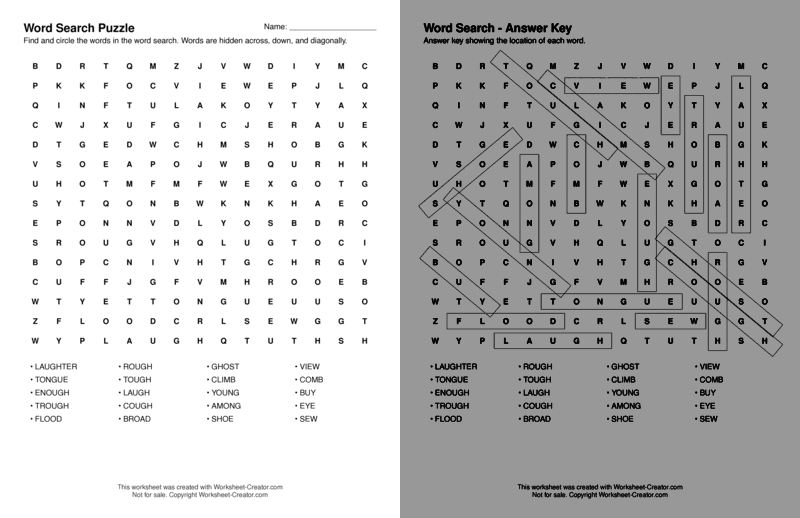
Word Search puzzles require students to visually scan for and identify sight words hidden among other letters. This builds the visual discrimination skills essential for rapid word recognition in text.
7. Roll and Read
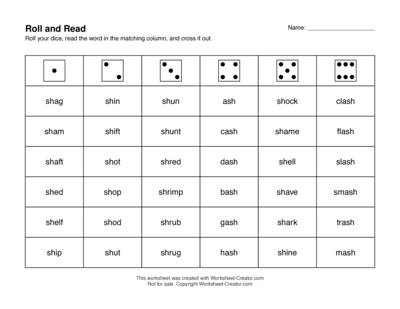
Roll and Read worksheets, made popular by the University of Florida Literacy Institute (UFLI), turn sight word practice into a game. Students roll a die and read the words in the corresponding column, making repetitive practice feel like play.
How to Create Sight Word Worksheets with Worksheet Creator
Creating a sight word worksheet takes less than a minute with Worksheet Creator:
- Sign in at worksheet-creator.com
- Choose your template from the options above (Sight Word Hunt, Trace Copy Cover Write, Bingo, Rainbow Words, etc.)
- Enter your sight words by typing them in, uploading a file, taking a photo of a word list, or selecting from our 420+ pre-made word lists
- Customize the worksheet title, instructions, and font style
- Download your print-ready PDF
That's it! You can create differentiated worksheets for different student groups in minutes.
Tips for Effective Sight Word Instruction
Worksheets are most effective when integrated into a comprehensive sight word program. Here are research-based strategies for teaching sight words:
1. Introduce Words in Small Groups
Introduce 3-5 new sight words per week rather than overwhelming students with large lists. This allows for the repetition needed for mastery before moving on.
2. Use Multi-Sensory Approaches
Combine visual, auditory, and kinesthetic learning. Have students see the word, say it aloud, trace it with their finger, and write it. The Trace, Copy, Cover & Write method naturally incorporates all these modalities.
3. Practice in Context
After practicing words in isolation, have students find them in sentences and books. This helps transfer recognition skills to real reading situations.
4. Review Regularly
Spiral back to previously learned words. Use Bingo cards or Roll and Read worksheets with a mix of new and review words to maintain mastery.
5. Consider Heart Word Mapping
For words that are partially decodable, teach the decodable parts using phonics and have students "learn by heart" only the irregular portion. For example, in the word "said," the "s" and "d" are regular, but the "ai" making the /e/ sound needs to be memorized.
6. Make It Fun
Games like Sight Word Bingo, partner activities with Roll and Read, a highlighter and a Sight Word Hunt, and colorful Rainbow Words keep students engaged during what might otherwise be tedious memorization.
Pre-made Sight Word Worksheets
Looking for ready-to-use sight word worksheets? Browse our Worksheet Store to find sight word worksheets created by other teachers that you can customize and use in your classroom.
For a closer look at the newest template on this list, read Introducing the Sight Word Hunt Worksheet Generator.
What teachers are saying about Worksheet Creator
I appreciate how fast and easy it is to use your templates.
Worksheet Creator has saved me so much time!
I love the breadth of options, and how you are consistently coming out with new ones.
Conclusion
Sight word fluency is essential for reading success, and the right worksheets can make practice both effective and engaging. Whether you choose Trace, Copy, Cover & Write for multi-sensory learning, Bingo for game-based review, or any of our other templates, Worksheet Creator helps you create professional, customized sight word worksheets in seconds.
The key is consistency: regular, varied practice with immediate feedback helps students build the automatic word recognition they need to become fluent readers.
Try it for free today
Create your first sight word worksheet in under a minute. We'd love to hear how it works in your classroom!