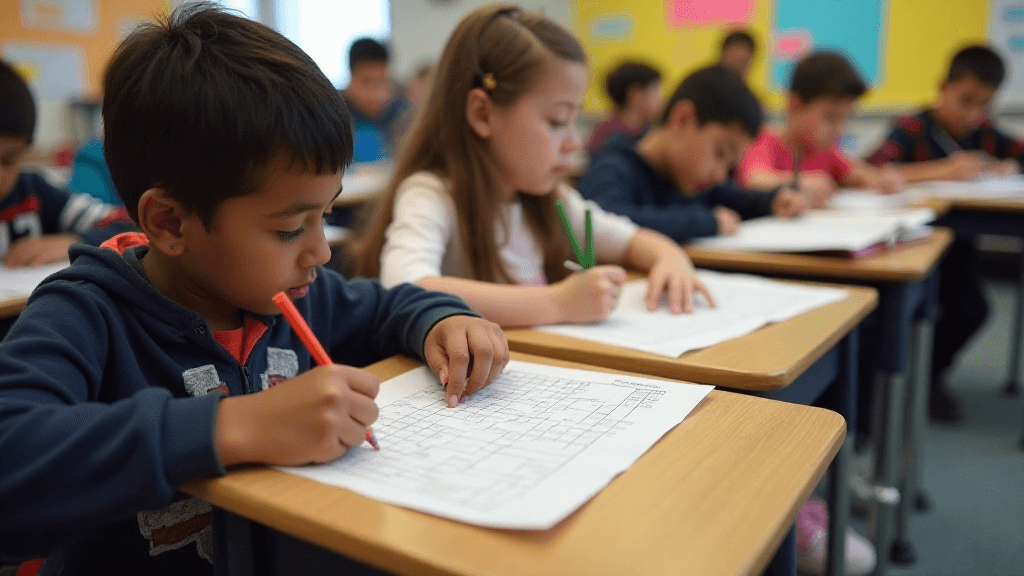
The Research Is Clear: Screens Aren't Helping With Spelling
If you teach 2nd, 3rd, or 4th grade, you've probably noticed something: the more time your students spend on devices, the less they seem to retain. You're not imagining it.
The research backs this up. An analysis of NAEP scores across all 50 states by neuroscientist Jared Cooney Horvath found that after schools adopted digital technology, standardized test scores dropped by roughly 1 to 1.7 points per year in both reading and math, across both 4th and 8th graders. UNESCO's 2023 Global Education Monitoring Report warned that excessive classroom technology can be a distraction that undermines learning, especially for younger students who haven't developed the self-regulation to stay on task.
For spelling, the case is even clearer. Handwriting activates areas of the brain tied to memory and letter recognition that typing does not. A Frontiers in Psychology study found that writing words by hand led to stronger recall and better orthographic learning compared to typing. When a student writes the word beautiful letter by letter, they process every part of that word. When they type it, autocorrect does half the work.
Schools across the country are pulling back. Some districts are limiting device use to specific subjects where digital tools are genuinely needed, like coding or data analysis, and returning to paper-based instruction for foundational skills like reading, writing, and spelling. This isn't nostalgia. It's a course correction.
So what does screen-free spelling instruction actually look like in a 2nd, 3rd, or 4th grade classroom? Two things: well-designed worksheets and hands-on activities that get students physically interacting with words.
Worksheets That Actually Teach Spelling
Not all worksheets are busywork. The right worksheet forces a student to slow down, look at the word closely, and reproduce it from memory. Here are the worksheet types from Worksheet Creator that work best for spelling practice in elementary grades.
1. Trace, Copy, Cover & Write
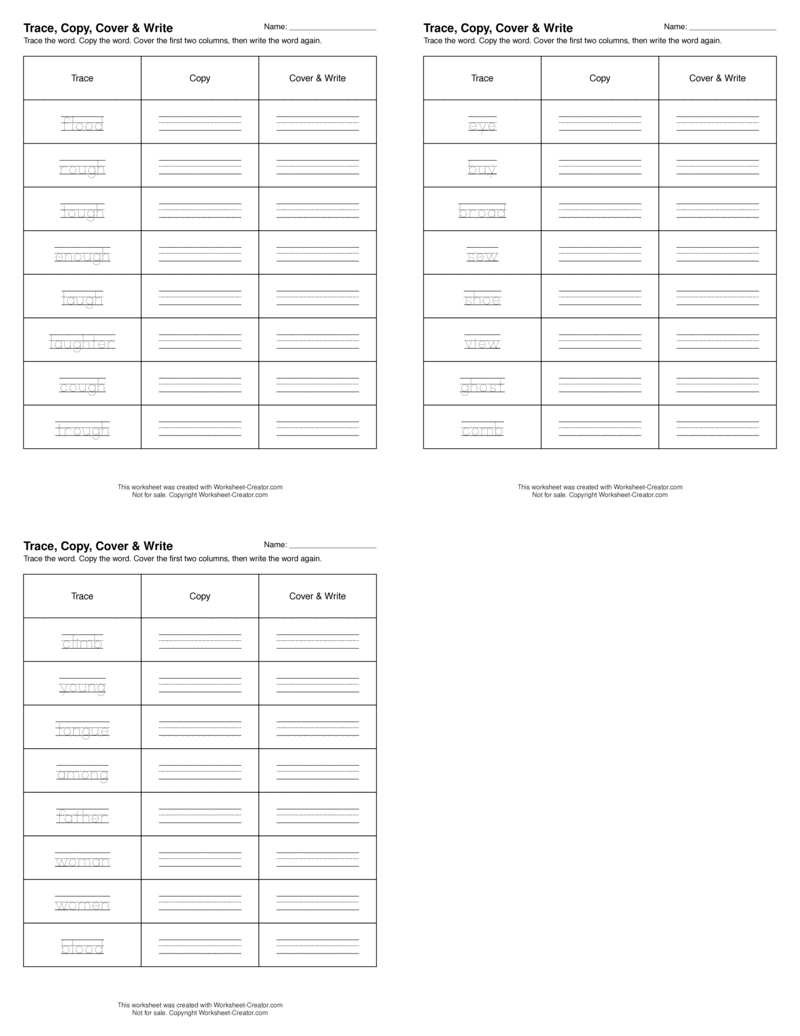
This is the one I'd start with. Students trace the word, copy it, cover the first two columns, then write it from memory. That last step is where the learning happens: it's a self-test baked right into the worksheet. The progression from tracing to writing from memory builds the kind of orthographic recall that typing exercises can't touch.
Create a Trace, Copy, Cover & Write worksheet →
2. Missing Letters
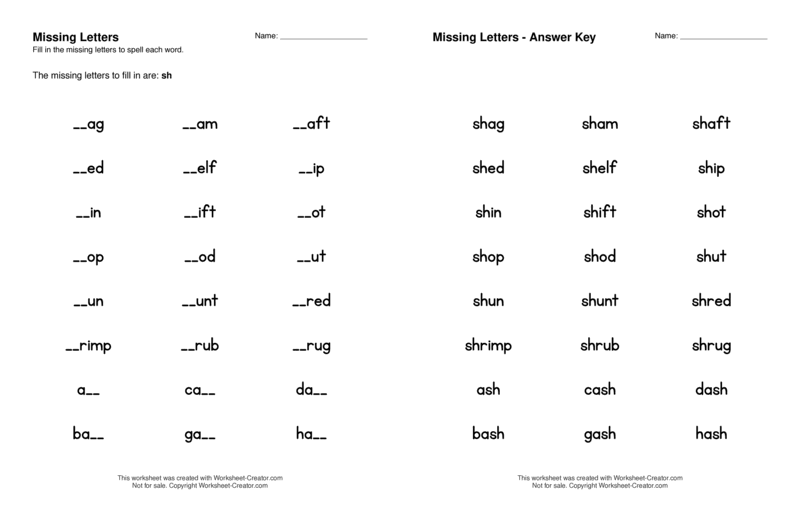
Missing Letters worksheets remove key letters from each word and ask students to fill them in. This is especially useful for words with tricky letter combinations, like the "ough" in thought or the silent "k" in know. Instead of writing the whole word on autopilot, students have to think about which specific letters belong where. It targets the exact parts of a word that students tend to get wrong.
Create a Missing Letters worksheet →
3. Word Scramble
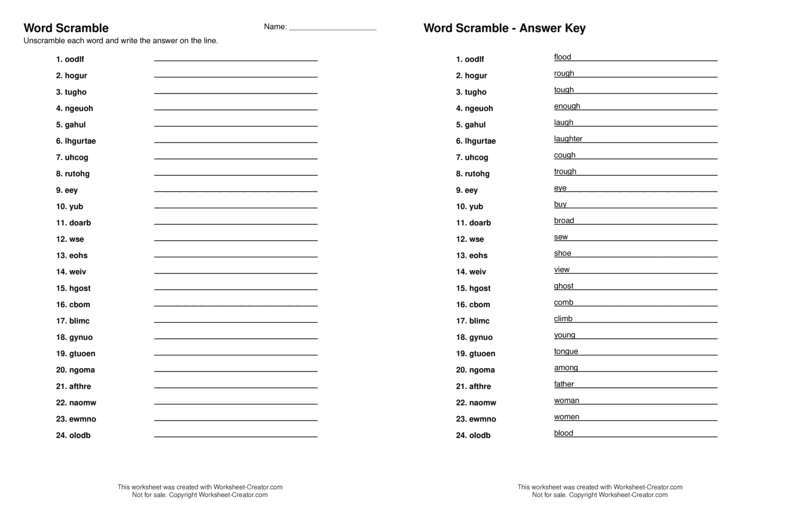
Scrambled words force students to mentally reconstruct the correct letter sequence. It's a puzzle that requires them to hold the word in their mind and manipulate the letters until they get it right. For 2nd through 4th graders, this kind of active problem-solving is far more engaging than simply copying a word five times in a row.
Create a Word Scramble worksheet →
4. Crossword Puzzles
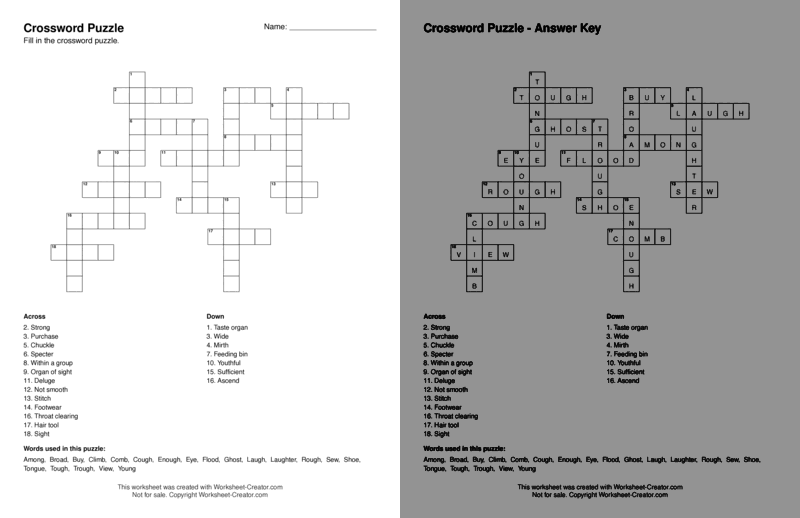
Crossword puzzles combine spelling with vocabulary and context clues. Students read a clue, figure out the word, and then spell it correctly one letter per box. There's no room for sloppy spelling here. If they get a letter wrong, the crossing words won't line up, giving them immediate feedback. This is a great option for 3rd and 4th graders who are ready for more challenge.
Create a Crossword Puzzle worksheet →
5. Word Search Puzzles
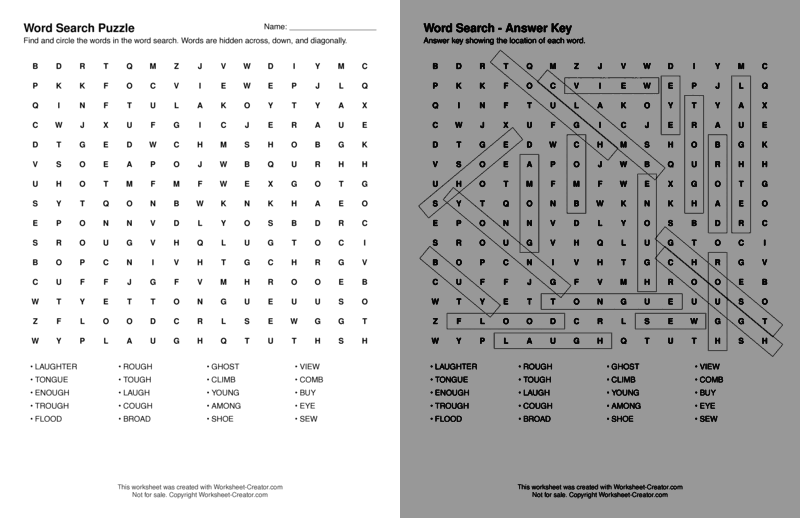
Word searches build visual discrimination. Students have to scan through a grid and pick out the exact letter sequence of each spelling word. It's a lighter activity, good for early finishers, spelling centers, or as a warm-up before more intensive practice. Students see the correct spelling over and over, which helps with visual memory even if they're not writing the word out.
Create a Word Search worksheet →
6. Rainbow Words
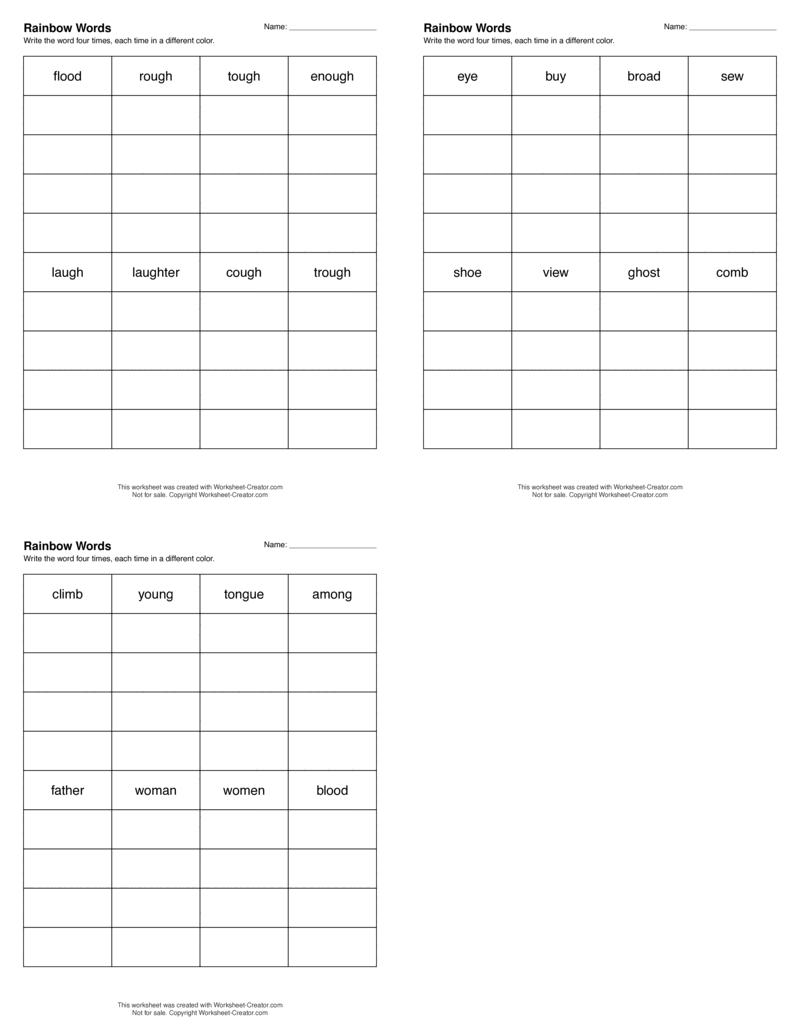
Rainbow Words worksheets have students write each word multiple times in different colors. This is a favorite for 2nd graders (and younger) in particular. The color-switching keeps students engaged, and the repetition builds muscle memory. It's a simple format that works well for both spelling words and sight words.
Create a Rainbow Words worksheet →
7. Cloze (Fill in the Blank) Paragraphs
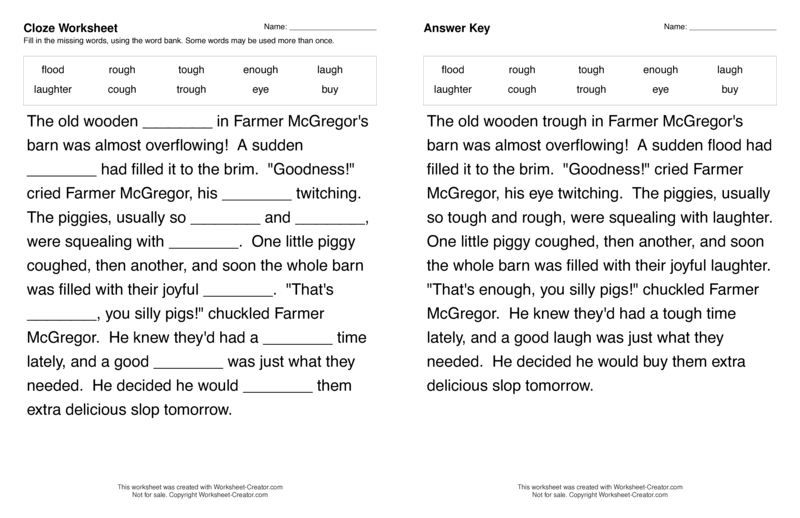
Cloze worksheets place spelling words inside a paragraph with blanks. Students figure out which word fits each blank based on context, then spell it correctly. Unlike the other worksheets on this list, Cloze forces students to think about what their spelling words actually mean and how they're used in real sentences. That makes it a good fit for 3rd and especially 4th graders.
8. Write 5 Sentences for 5 Words
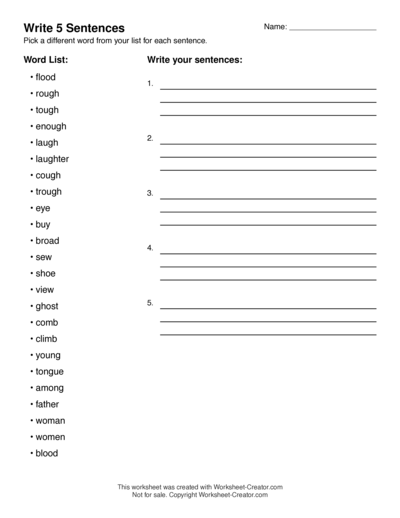
Give students five spelling words and ask them to write an original sentence for each one. This pushes past memorization into actual usage, which is the whole point of learning to spell a word. If a student can use because correctly in a sentence they wrote themselves, they're far more likely to spell it right next time they need it.
Create a Write 5 Sentences worksheet →
9. Read, Sort, and Write
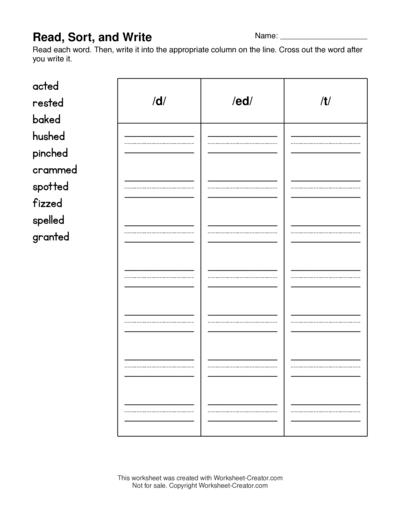
Sorting worksheets ask students to categorize their spelling words by pattern, sound, or rule. You might sort words by vowel sound, by suffix, or by syllable count. When students sort, they start noticing patterns on their own -- "oh, all the words with the long 'a' sound have 'ai' in the middle." That kind of insight sticks in a way that writing a word ten times does not.
Create a Read, Sort, and Write worksheet →
10. Word Matrix with Word Hunt
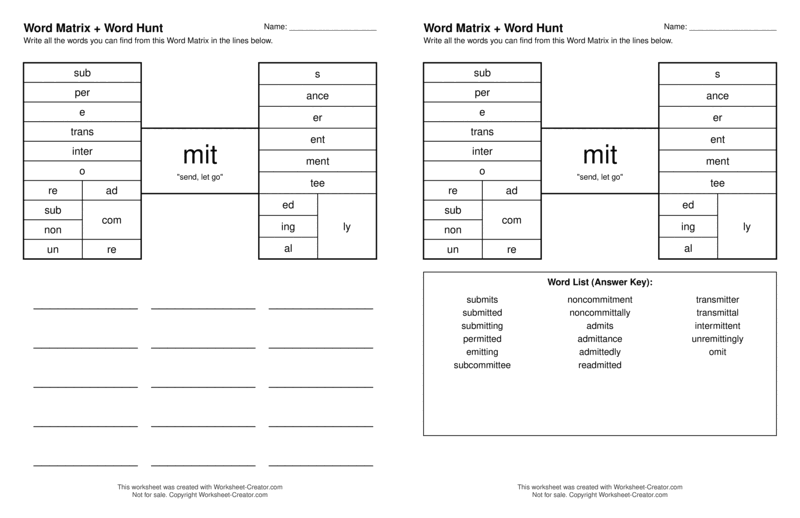
This one is better suited for 4th graders and up, but it's worth including because it changes the way students think about spelling entirely. A Word Matrix breaks a word into its base, prefixes, and suffixes. Students see that unhelpful isn't just a long word to memorize -- it's un + help + ful, and once they know those pieces, they can spell helpful, helpless, unhelpful, and helper without memorizing each one separately.
That's the power of morphology: students stop memorizing words one at a time and start understanding how English is built. A student who knows the Latin root struct (to build) can work out construct, destruction, instructor, and restructure. Spelling improves, but so does vocabulary and reading comprehension, because the same word parts show up everywhere.
Create a Word Matrix worksheet →
Beyond the Worksheet: Hands-On Spelling Activities
Worksheets do the heavy lifting, but you'll get more out of your spelling block if you mix in activities that get students out of their seats. Here are some that pair well with your worksheet routine and don't require a single device.
Write Words in Shaving Cream
Spray a small mound of shaving cream on each student's desk and let them spread it out into a thin layer. Call out a spelling word and have them write it in the shaving cream with their finger. They can "erase" by smoothing the cream and do the next word. Students love this one. The physical sensation of forming each letter with their finger reinforces the letter sequence in a way that pencil-and-paper alone doesn't. Just make sure to check for skin sensitivities first, and lay down some newspaper if your custodian is particular.
Spelling Go Fish
Make two cards for each spelling word (you can use index cards or print a word list and cut them out). Deal five cards to each player. Students take turns asking, "Do you have the word thought?" If the other player has it, they hand it over and the asker makes a pair. If not, "Go fish!" To make it a spelling activity, require students to spell the word aloud when they ask for it and when they make a match. You get tons of repetition, but it feels like a game instead of a drill.
Spelling Tic-Tac-Toe
Draw a tic-tac-toe grid on a whiteboard or piece of paper. Two students play against each other. To claim a square, a student must correctly spell a word you call out. If they get it right, they place their X or O. If they get it wrong, they lose their turn. The competitive element keeps them locked in. You can also use the Tic Tac Toe worksheet template for a printed version students can play at their desks.
Spell It With Your Body
Have students stand up and "write" each letter of a spelling word in the air with large arm movements. Or have teams of students form letters with their bodies on the floor while classmates guess the word. It's a good brain break that keeps spelling practice going while letting students move. Works especially well with shorter words for 2nd graders.
Spelling Memory Match
Write each spelling word on two separate index cards. Shuffle and lay them all face-down. Students flip over two cards at a time trying to find matching pairs. When they flip a card, they must read the word aloud. When they find a match, they must use the word in a sentence. This works great as a center activity or partner game and gives students repeated exposure to each word.
Salt or Sand Tray Writing
Pour a thin layer of salt or sand into a shallow tray or baking sheet. Students use their finger to write each spelling word in the salt, then gently shake the tray to "erase" and write the next one. Like shaving cream, this adds a tactile element. It's quieter and less messy, making it a good option for a spelling center that runs during independent work time.
Word Building With Letter Tiles
Use Scrabble tiles, magnetic letters, or letter cards cut from paper. Call out a word and have students build it with their tiles. Then scramble the tiles and build it again from memory. This is the physical version of a word scramble, and it works especially well for students who struggle with pencil-and-paper activities.
Putting It All Together: A Sample Screen-Free Spelling Week
Here's what a week of screen-free spelling instruction might look like in a 3rd grade classroom with a list of 10-15 spelling words:
| Day | Activity |
|---|---|
| Monday | Introduce words. Students complete a Trace, Copy, Cover & Write worksheet for initial exposure. |
| Tuesday | Read, Sort, and Write worksheet to analyze word patterns (e.g., sort by vowel pattern or suffix). Follow up with shaving cream writing for the trickiest words. |
| Wednesday | Missing Letters worksheet targeting the hardest parts of each word. Partner activity: Spelling Go Fish. |
| Thursday | Crossword Puzzle or Word Scramble for independent practice. Early finishers do a Word Search. |
| Friday | Spelling test. Students who finish early play Spelling Bingo as a class review. |
Every activity in this schedule involves pencil, paper, or physical movement. No devices, no logins, no passwords, no "my Chromebook isn't charged." Just words, practiced until they stick.
What teachers are saying about Worksheet Creator
I appreciate how fast and easy it is to use your templates.
Worksheet Creator has saved me so much time!
I love the breadth of options, and how you are consistently coming out with new ones.
Can't I Just Find These on Teachers Pay Teachers?
You can try. TPT has over 9 million listings, and some of them are genuinely great. But finding the right spelling worksheet for your specific word list, grade level, and font preference means scrolling through pages of results -- many of which are now AI-generated filler that looks polished in the preview but falls apart when you actually use it in a classroom.
Even when you find something decent, it's not your word list. You still have to adapt it, or settle for someone else's words and hope they line up with what you're teaching this week.
With Worksheet Creator, you type in your words and get exactly the worksheet you need. You can buy a single worksheet for a one-time use, or get a subscription to create as many as you want throughout the year. Every worksheet uses your words, your instructions, and your choice of font. No browsing, no settling, no surprises. We wrote a full comparison of Worksheet Creator vs. Teachers Pay Teachers if you want the longer version.
Start creating screen-free spelling worksheets
Every worksheet on this page can be created in under a minute with Worksheet Creator. Enter your spelling words, pick a template, customize the font and instructions, and download a print-ready PDF.
References
- Horvath, J. C. (2025). When Correlation Repeats Across 50 States. The Digital Delusion. thedigitaldelusion.substack.com
- UNESCO. (2023). Global Education Monitoring Report: Technology in Education.
- Frontiers in Psychology. (2020). Handwriting Is Superior to Typing for Learning to Read and Write. frontiersin.org