5th Grade Worksheets
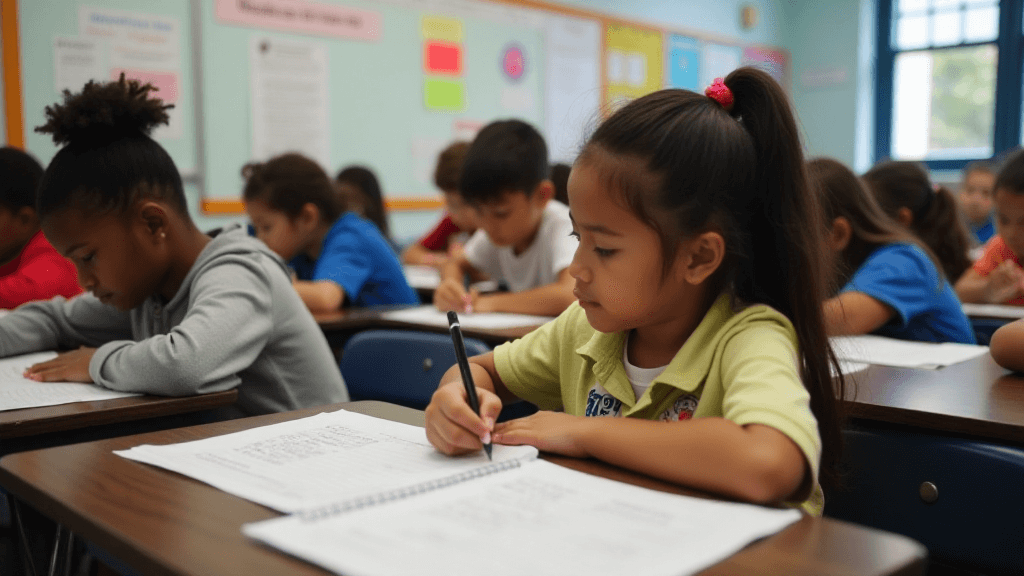
5th Grade Worksheets Store
Here are ELA, Spelling, Vocabulary, and Reading Comprehension resources for 5th grade. These are designed by teachers, and used in the classroom, today. You can add any of them to your account and customize them for free.
To download a single worksheet, you can purchase it for $3.99. Or, purchase a full year of worksheet downloads for $39.99.
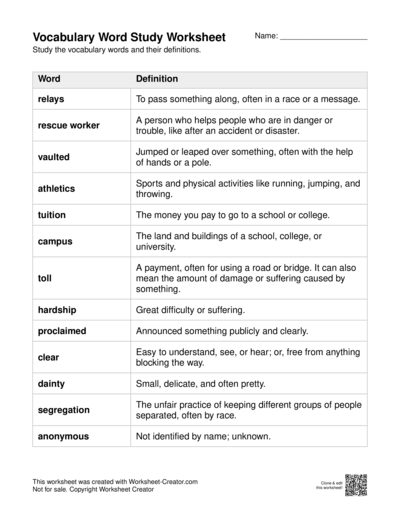
Vocabulary Word Study Worksheet
Words used: relays, rescue worker, valuted, athletics, tuition, campus, toll, hardship, proclaimed, clear, dainty, segregation, anonymous
For grade level: 5th Grade
Created by: L. Olorunfemi
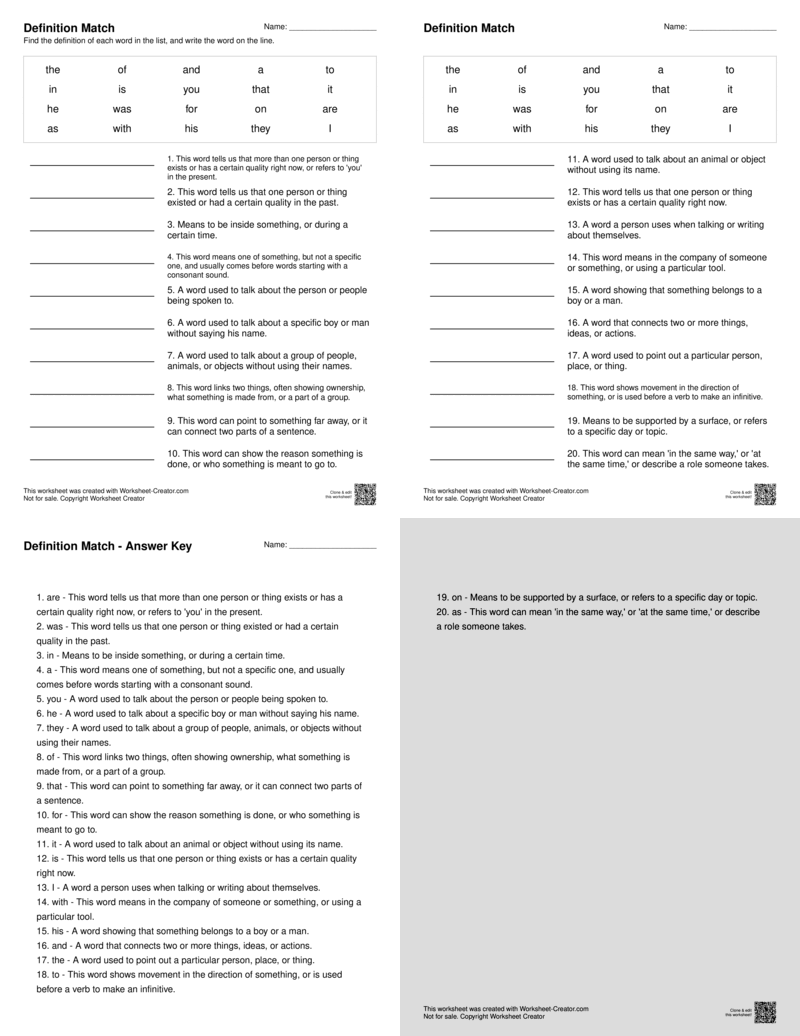
Definition Match
Words used: the, of, and, a, to, in, is, you, that, it, he, was, for, on, are, as, with, his, they, I, at, be, this, have, from
For grade level: 3rd Grade, 4th Grade, 5th Grade, 6th Grade
Created by: K. Leavitt
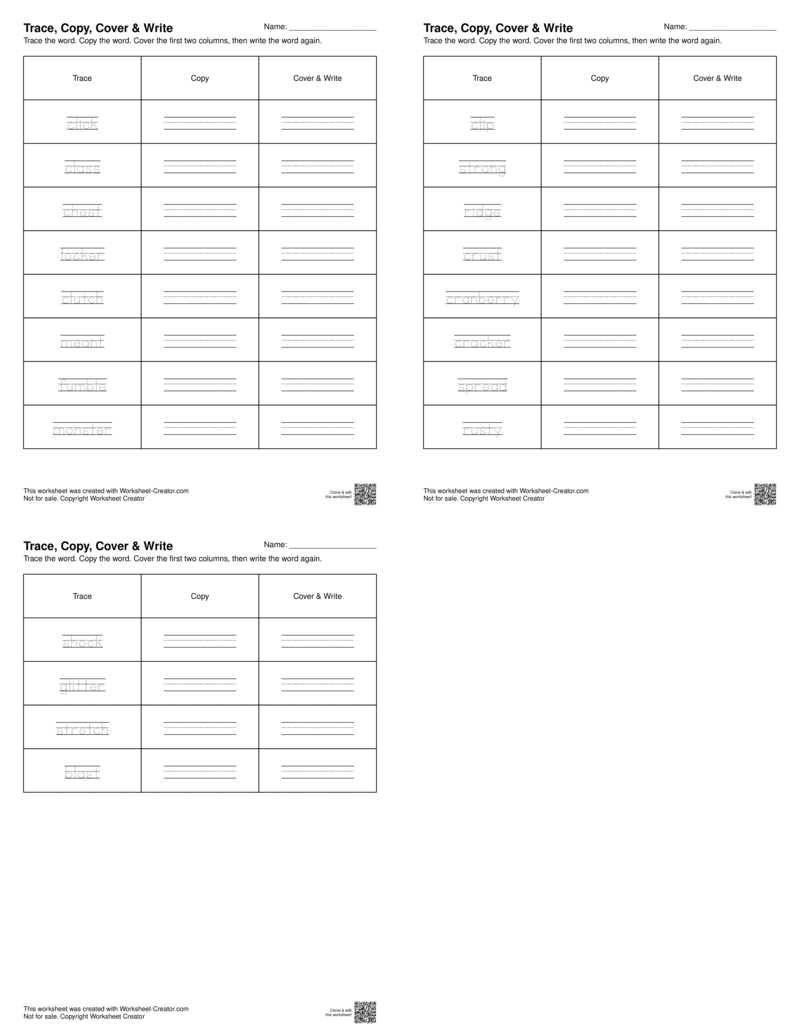
Trace, Copy, Cover & Write
Words used: click, class, chest, locker, clutch, meant, fumble, monster, clip, strong, ridge, crust, cranberry, cracker, spread, rusty, shock, glitter, stretch, blast
For grade level: 3rd Grade, 4th Grade, 5th Grade, 6th Grade
Created by: K. Leavitt
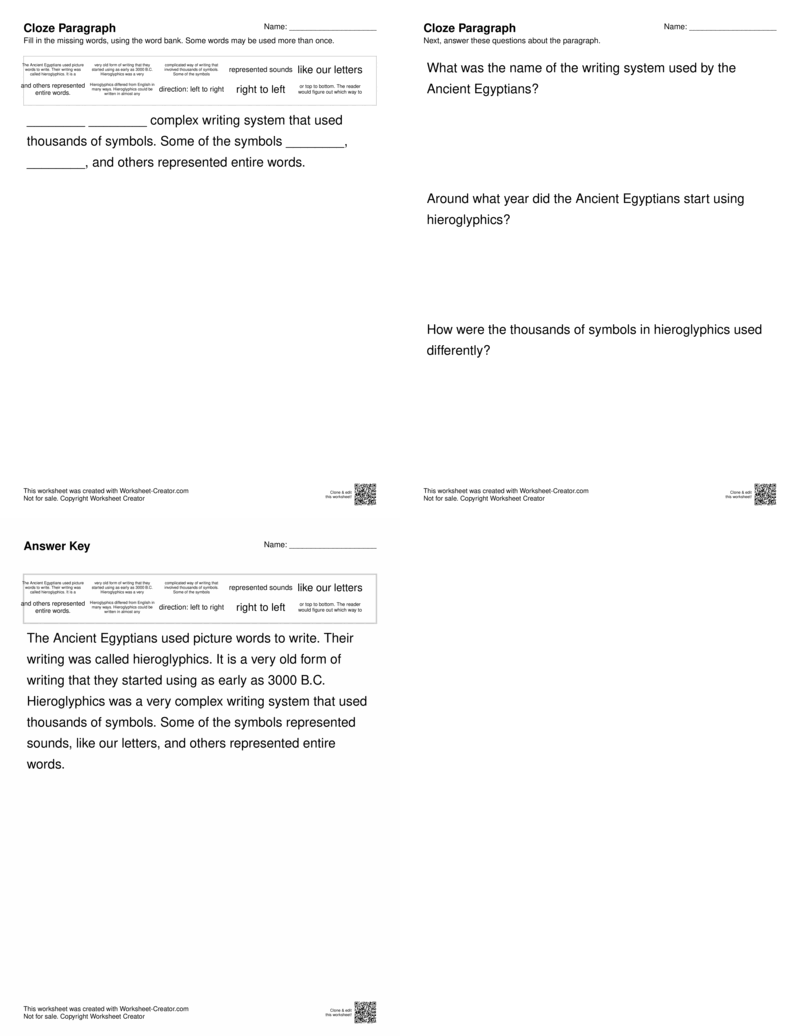
Cloze Paragraph
Words used: The Ancient Egyptians used picture words to write. Their writing was called hieroglyphics. It is a, very old form of writing that they started using as early as 3000 B.C. Hieroglyphics was a very, complicated way of writing that involved thousands of symbols. Some of the symbols, represented sounds, like our letters, and others represented entire words., Hieroglyphics differed from English in many ways. Hieroglyphics could be written in almost any, direction: left to right, right to left, or top to bottom. The reader would figure out which way to, read it by the direction of the symbols. The writers didn't use any punctuation. One of the goals, in writing hieroglyphics was that the writing would look like art and be beautiful to look at. A, single picture symbol could stand for a whole word, called an ideogram, or a sound, called a, phonogram. For example, a picture of an eye could mean the word "eye" or the letter "I"., Because writing in hieroglyphics was so complex, it took years of education and practice to, master it. The people who trained to write were called scribes. They would start training at a, very young age of six or seven. Most of the Ancient Egyptians could not read or write., Being a scribe was a good job in ancient Egypt. Scribes didn't have to pay taxes or enter the, army. They were highly regarded. Only the children of wealthy people were allowed to train as, scribes., The Ancient Egyptians often wrote on tablets or walls, but they also wrote on a type of paper, called papyrus. Paper was made from a tall, reedlike plant called papyrus. The Egyptians would, use strips from the plant's inner stem to make the paper. They would make two layers of strips;, one horizontal and the other vertical. Then they would cover it in a linen cloth and apply, pressure with a mallet or stones. The strips would bind together over time, making a single flat, sheet to write on., In 1799, a French soldier found a special stone in the city of Rosetta, Egypt. This stone had the, same message written in both hieroglyphics and Greek. This was important because it helped, people to translate what the hieroglyphics said. Then the stone could be used to help translate, other hieroglyphics as well., Sometimes scribes used a faster, short form of hieroglyphics on papyrus called hieratic. When, the Greeks took over Egypt, many scribes had to learn Greek as well. A very famous scribe was, Imhotep. He became high priest of the Egyptian sun god and designed the first pyramid., The Ancient Egyptians used picture words to write. Their writing was called hieroglyphics. It is a, very old form of writing that they started using as early as 3000 B.C. Hieroglyphics was a very, complicated way of writing that involved thousands of symbols. Some of the symbols, represented sounds, like our letters, and others represented entire words., Hieroglyphics differed from English in many ways. Hieroglyphics could be written in almost any, direction: left to right, right to left, or top to bottom. The reader would figure out which way to, read it by the direction of the symbols. The writers didn't use any punctuation. One of the goals, in writing hieroglyphics was that the writing would look like art and be beautiful to look at. A, single picture symbol could stand for a whole word, called an ideogram, or a sound, called a, phonogram. For example, a picture of an eye could mean the word "eye" or the letter "I"., Because writing in hieroglyphics was so complex, it took years of education and practice to, master it. The people who trained to write were called scribes. They would start training at a, very young age of six or seven. Most of the Ancient Egyptians could not read or write., Being a scribe was a good job in ancient Egypt. Scribes didn't have to pay taxes or enter the, army. They were highly regarded. Only the children of wealthy people were allowed to train as, scribes., The Ancient Egyptians often wrote on tablets or walls, but they also wrote on a type of paper, called papyrus. Paper was made from a tall, reedlike plant called papyrus. The Egyptians would, use strips from the plant's inner stem to make the paper. They would make two layers of strips;, one horizontal and the other vertical. Then they would cover it in a linen cloth and apply, pressure with a mallet or stones. The strips would bind together over time, making a single flat, sheet to write on., In 1799, a French soldier found a special stone in the city of Rosetta, Egypt. This stone had the, same message written in both hieroglyphics and Greek. This was important because it helped, people to translate what the hieroglyphics said. Then the stone could be used to help translate, other hieroglyphics as well., Sometimes scribes used a faster, short form of hieroglyphics on papyrus called hieratic. When, the Greeks took over Egypt, many scribes had to learn Greek as well. A very famous scribe was, Imhotep. He became high priest of the Egyptian sun god and designed the first pyramid.
For grade level: 5th Grade
Created by: I. Ericsson
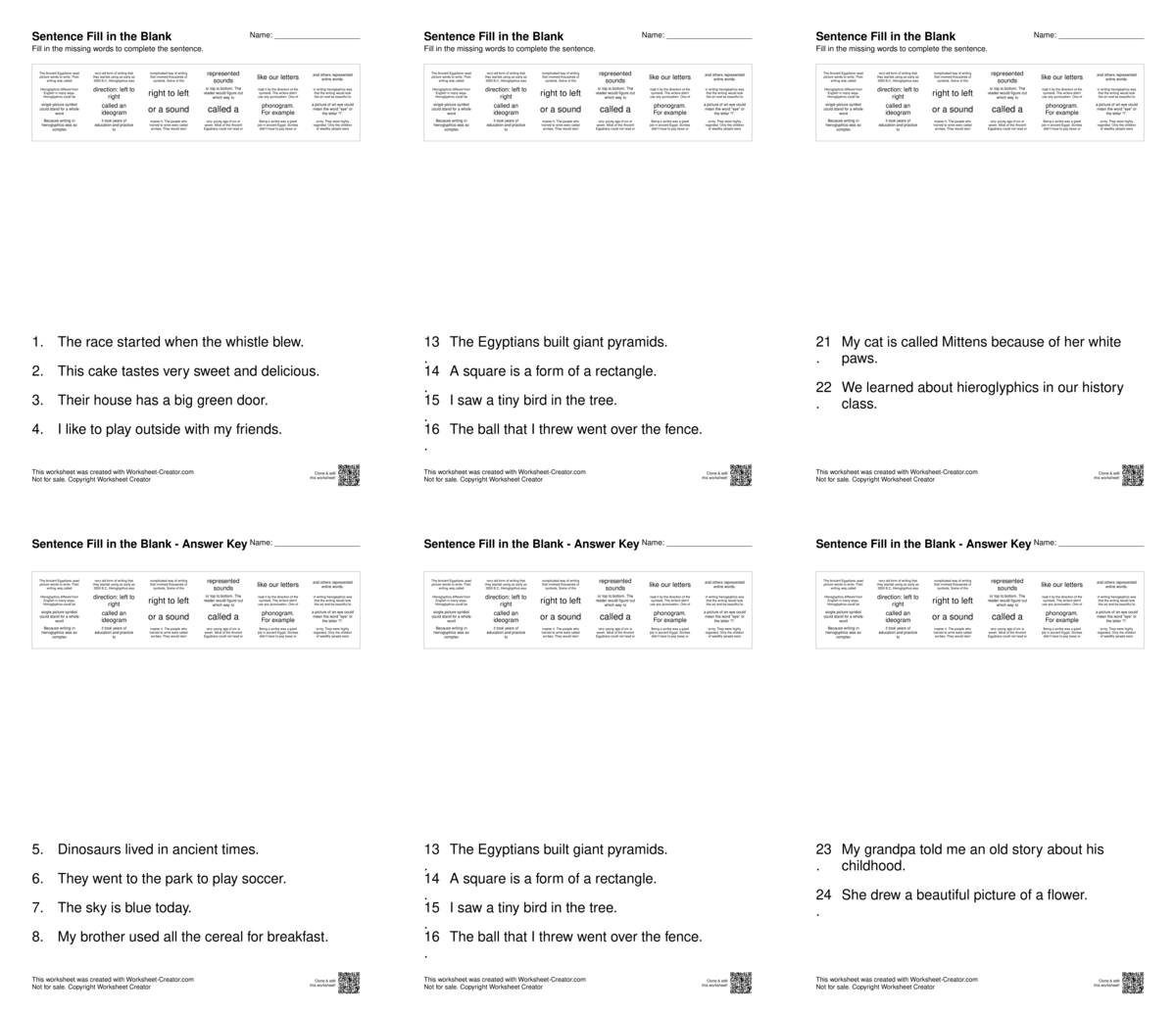
Sentence Fill in the Blank
Words used: The Ancient Egyptians used picture words to write. Their writing was called hieroglyphics. It is a, very old form of writing that they started using as early as 3000 B.C. Hieroglyphics was a very, complicated way of writing that involved thousands of symbols. Some of the symbols, represented sounds, like our letters, and others represented entire words., Hieroglyphics differed from English in many ways. Hieroglyphics could be written in almost any, direction: left to right, right to left, or top to bottom. The reader would figure out which way to, read it by the direction of the symbols. The writers didn't use any punctuation. One of the goals, in writing hieroglyphics was that the writing would look like art and be beautiful to look at. A, single picture symbol could stand for a whole word, called an ideogram, or a sound, called a, phonogram. For example, a picture of an eye could mean the word "eye" or the letter "I"., Because writing in hieroglyphics was so complex, it took years of education and practice to, master it. The people who trained to write were called scribes. They would start training at a, very young age of six or seven. Most of the Ancient Egyptians could not read or write., Being a scribe was a good job in ancient Egypt. Scribes didn't have to pay taxes or enter the, army. They were highly regarded. Only the children of wealthy people were allowed to train as, scribes., The Ancient Egyptians often wrote on tablets or walls, but they also wrote on a type of paper, called papyrus. Paper was made from a tall, reedlike plant called papyrus. The Egyptians would, use strips from the plant's inner stem to make the paper. They would make two layers of strips;, one horizontal and the other vertical. Then they would cover it in a linen cloth and apply, pressure with a mallet or stones. The strips would bind together over time, making a single flat, sheet to write on., In 1799, a French soldier found a special stone in the city of Rosetta, Egypt. This stone had the, same message written in both hieroglyphics and Greek. This was important because it helped, people to translate what the hieroglyphics said. Then the stone could be used to help translate, other hieroglyphics as well., Sometimes scribes used a faster, short form of hieroglyphics on papyrus called hieratic. When, the Greeks took over Egypt, many scribes had to learn Greek as well. A very famous scribe was, Imhotep. He became high priest of the Egyptian sun god and designed the first pyramid., The Ancient Egyptians used picture words to write. Their writing was called hieroglyphics. It is a, very old form of writing that they started using as early as 3000 B.C. Hieroglyphics was a very, complicated way of writing that involved thousands of symbols. Some of the symbols, represented sounds, like our letters, and others represented entire words., Hieroglyphics differed from English in many ways. Hieroglyphics could be written in almost any, direction: left to right, right to left, or top to bottom. The reader would figure out which way to, read it by the direction of the symbols. The writers didn't use any punctuation. One of the goals, in writing hieroglyphics was that the writing would look like art and be beautiful to look at. A, single picture symbol could stand for a whole word, called an ideogram, or a sound, called a, phonogram. For example, a picture of an eye could mean the word "eye" or the letter "I"., Because writing in hieroglyphics was so complex, it took years of education and practice to, master it. The people who trained to write were called scribes. They would start training at a, very young age of six or seven. Most of the Ancient Egyptians could not read or write., Being a scribe was a good job in ancient Egypt. Scribes didn't have to pay taxes or enter the, army. They were highly regarded. Only the children of wealthy people were allowed to train as, scribes., The Ancient Egyptians often wrote on tablets or walls, but they also wrote on a type of paper, called papyrus. Paper was made from a tall, reedlike plant called papyrus. The Egyptians would, use strips from the plant's inner stem to make the paper. They would make two layers of strips;, one horizontal and the other vertical. Then they would cover it in a linen cloth and apply, pressure with a mallet or stones. The strips would bind together over time, making a single flat, sheet to write on., In 1799, a French soldier found a special stone in the city of Rosetta, Egypt. This stone had the, same message written in both hieroglyphics and Greek. This was important because it helped, people to translate what the hieroglyphics said. Then the stone could be used to help translate, other hieroglyphics as well., Sometimes scribes used a faster, short form of hieroglyphics on papyrus called hieratic. When, the Greeks took over Egypt, many scribes had to learn Greek as well. A very famous scribe was, Imhotep. He became high priest of the Egyptian sun god and designed the first pyramid.
For grade level: 5th Grade
Created by: I. Ericsson
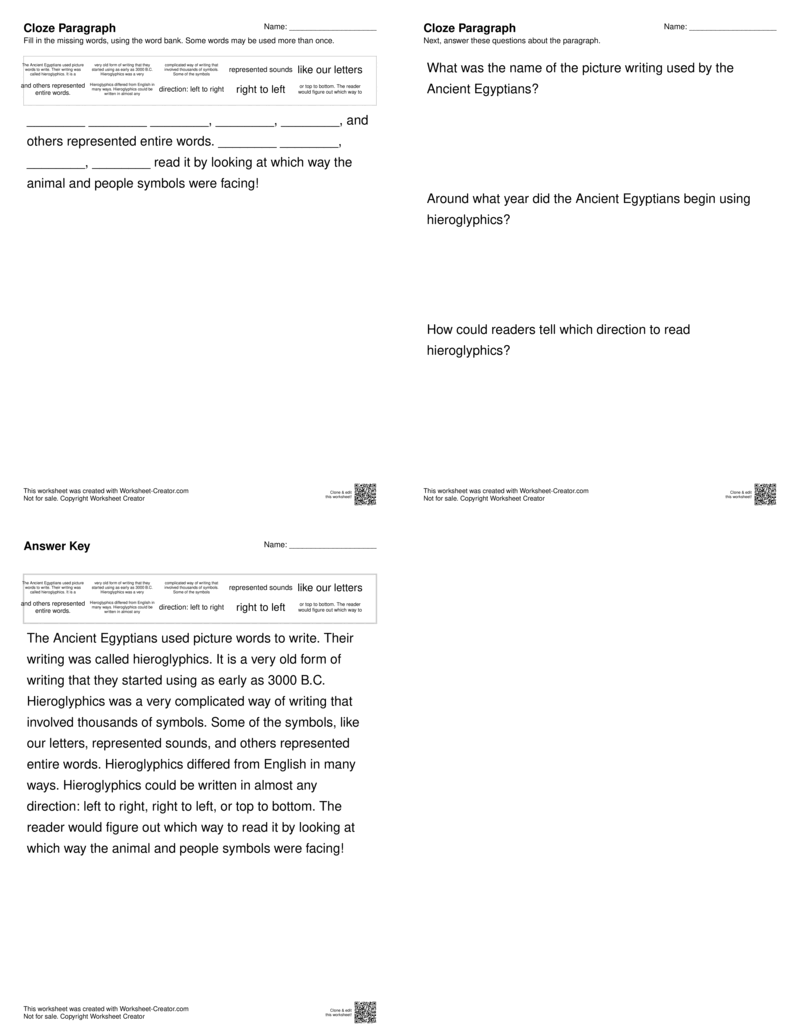
Cloze Paragraph
Words used: The Ancient Egyptians used picture words to write. Their writing was called hieroglyphics. It is a, very old form of writing that they started using as early as 3000 B.C. Hieroglyphics was a very, complicated way of writing that involved thousands of symbols. Some of the symbols, represented sounds, like our letters, and others represented entire words., Hieroglyphics differed from English in many ways. Hieroglyphics could be written in almost any, direction: left to right, right to left, or top to bottom. The reader would figure out which way to, read it by the direction of the symbols. The writers didn't use any punctuation. One of the goals, in writing hieroglyphics was that the writing would look like art and be beautiful to look at. A, single picture symbol could stand for a whole word, called an ideogram, or a sound, called a, phonogram. For example, a picture of an eye could mean the word "eye" or the letter "I"., Because writing in hieroglyphics was so complex, it took years of education and practice to, master it. The people who trained to write were called scribes. They would start training at a, very young age of six or seven. Most of the Ancient Egyptians could not read or write., Being a scribe was a good job in ancient Egypt. Scribes didn't have to pay taxes or enter the, army. They were highly regarded. Only the children of wealthy people were allowed to train as, scribes., The Ancient Egyptians often wrote on tablets or walls, but they also wrote on a type of paper, called papyrus. Paper was made from a tall, reedlike plant called papyrus. The Egyptians would, use strips from the plant's inner stem to make the paper. They would make two layers of strips;, one horizontal and the other vertical. Then they would cover it in a linen cloth and apply, pressure with a mallet or stones. The strips would bind together over time, making a single flat, sheet to write on., In 1799, a French soldier found a special stone in the city of Rosetta, Egypt. This stone had the, same message written in both hieroglyphics and Greek. This was important because it helped, people to translate what the hieroglyphics said. Then the stone could be used to help translate, other hieroglyphics as well., Sometimes scribes used a faster, short form of hieroglyphics on papyrus called hieratic. When, the Greeks took over Egypt, many scribes had to learn Greek as well. A very famous scribe was, Imhotep. He became high priest of the Egyptian sun god and designed the first pyramid.
For grade level: 5th Grade, 6th Grade
Created by: I. Ericsson
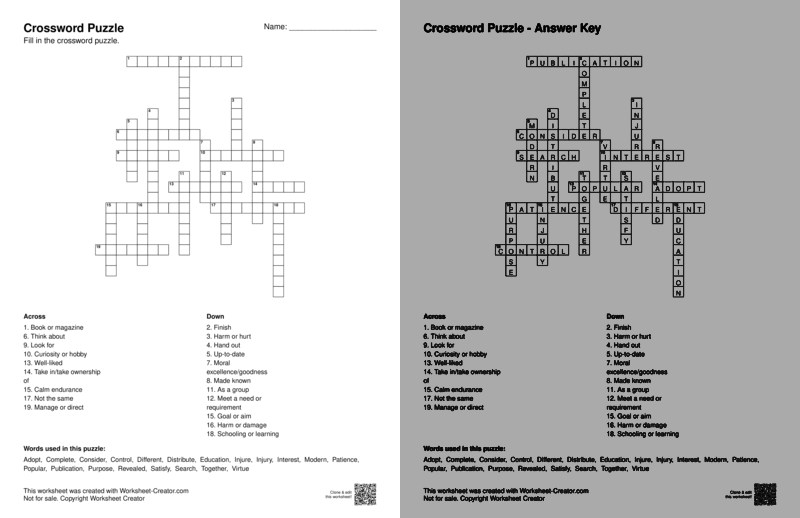
Crossword Puzzle
Words used: modern, popular, complete, adopt, revealed, distribute, purpose, different, satisfy, control, publication, virtue, search, together, patience, consider, injure, injury, interest, education
For grade level: 5th Grade
Created by: A. Lopez
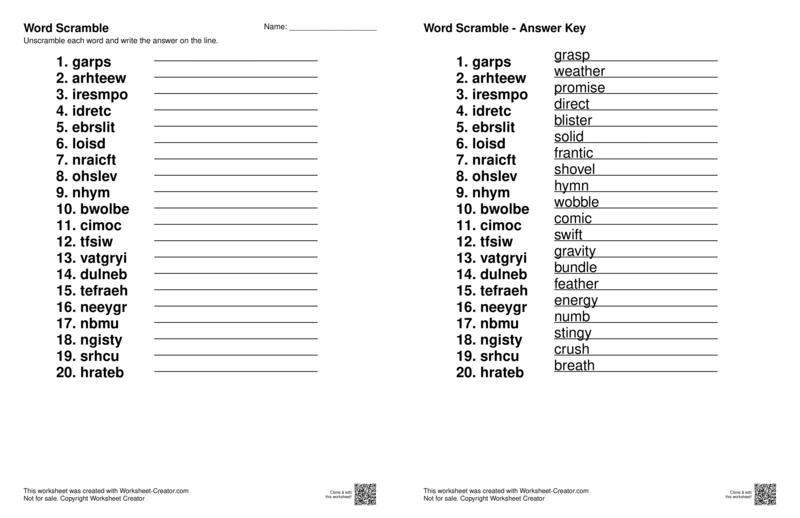
Word Scramble
Words used: breath, wobble, blister, crush, direct, promise, grasp, numb, hymn, shovel, gravity, frantic, swift, feather, comic, bundle, solid, weather, energy, stingy
For grade level: 5th Grade
Created by: J. Rentschler
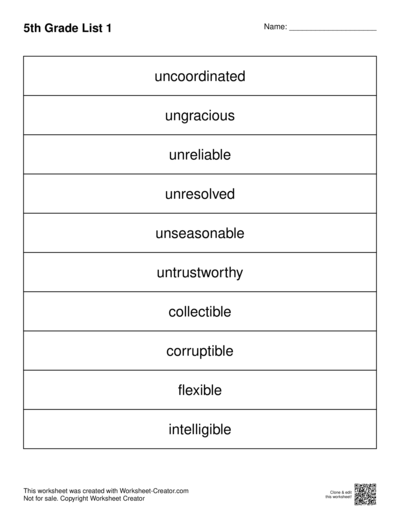
5th Grade List 1
Words used: uncoordinated, ungracious, unreliable, unresolved, unseasonable, untrustworthy, collectible, corruptible, flexible, intelligible
For grade level: 5th Grade
Created by: B. Schingeck
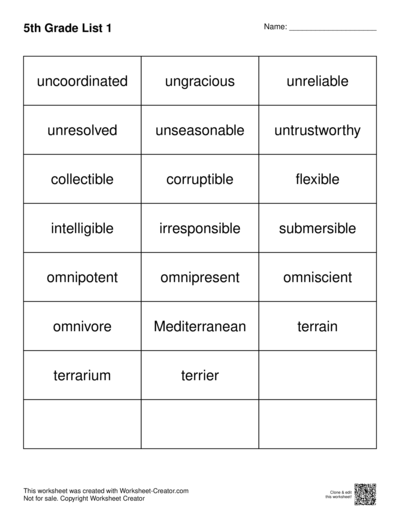
5th Grade List 1
Words used: uncoordinated, ungracious, unreliable, unresolved, unseasonable, untrustworthy, collectible, corruptible, flexible, intelligible, irresponsible, submersible, omnipotent, omnipresent, omniscient, omnivore, Mediterranean, terrain, terrarium, terrier
For grade level: 5th Grade
Created by: B. Schingeck
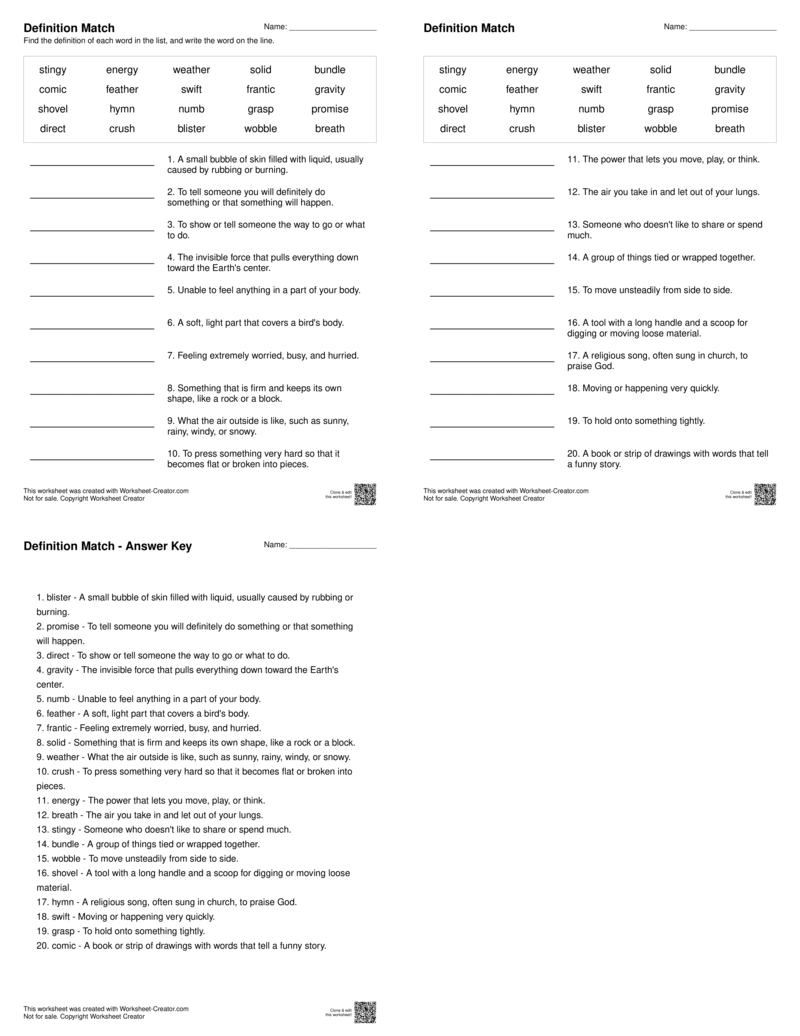
Definition Match
Words used: stingy, energy, weather, solid, bundle, comic, feather, swift, frantic, gravity, shovel, hymn, numb, grasp, promise, direct, crush, blister, wobble, breath
For grade level: 5th Grade
Created by: A. Brownell
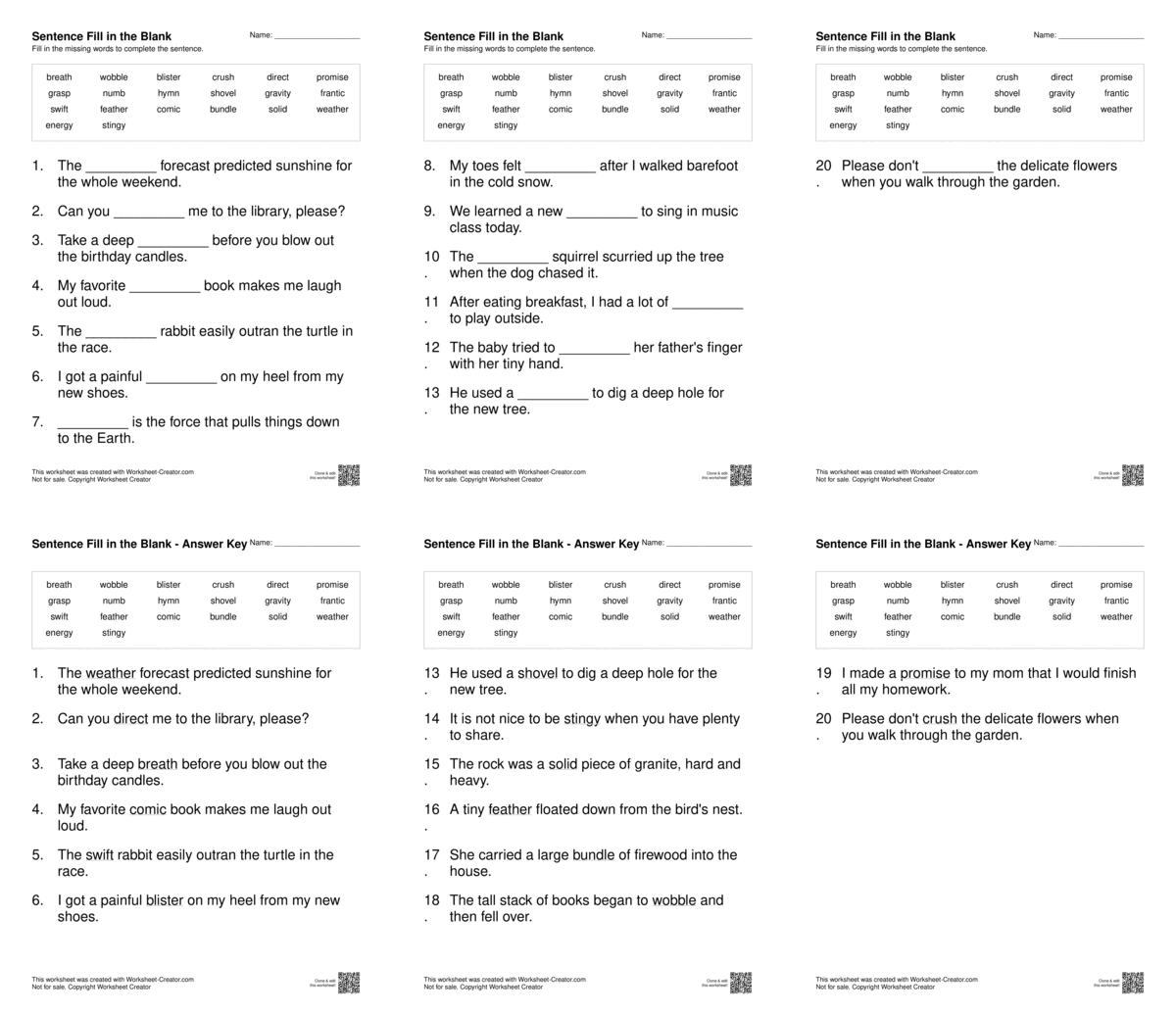
Sentence Fill in the Blank
Words used: breath, wobble, blister, crush, direct, promise, grasp, numb, hymn, shovel, gravity, frantic, swift, feather, comic, bundle, solid, weather, energy, stingy
For grade level: 5th Grade
Created by: J. Sheldon
5th Grade Worksheet Generators and Templates
Do you prefer to start by generating a worksheet from one of our templates by scratch? Here are our most popular options:
Letter & Sound Practice
- Trace, Copy, Cover & Write - Perfect for practicing letter formation and sight words
- Look, Say, Cover, Write, Check - Look at the word, say it, cover it, write it, check it
- Draw and Label - Early vocabulary and picture-word association
- Rainbow Words - Fun way to practice letter recognition and formation
- Missing Letters - Reinforce the relationship of letters in words
Reading & Phonics
- Word Hunt with Comprehension Questions - Underline/circle the words in the paragraph, and answer the comprehension questions on the next page
- Cloze Paragraph - Fill in the blanks in the paragraph, and answer the comprehension questions on the next page
- Rainbow Words - Fun way to practice letter recognition and formation
- Missing Letters - Reinforce the relationship of letters in words
- Rhyming Pairs with Suggested Answers - Connect letters with their sounds
Word Lists & Games
- 16 Words List - Perfect for creating spelling word lists and sorts
- 24 Words List - More words in the list
- Bingo Cards - Fun way to practice letter and sight word recognition
- Tic Tac Toe - Engaging letter and word practice game
- Crossword Puzzle - Find words in a grid with the clues
Why Worksheets Matter in Fifth Grade
Fifth grade is a critical year for developing advanced literacy skills and preparing students for middle school. At this stage, students are transitioning from learning to read to reading to learn. The focus shifts to building vocabulary, improving comprehension, and developing critical thinking skills through more complex texts.
Worksheets, when designed thoughtfully, can be powerful tools in your 5th grade classroom.
In a fifth grade classroom, well-designed worksheets serve several important purposes:
- Vocabulary Development: They provide opportunities to learn and practice new vocabulary in context.
- Reading Comprehension: They help students develop deeper understanding of complex texts.
- Critical Thinking: They encourage analysis and evaluation of information.
- Writing Skills: They support the development of more sophisticated writing abilities.
- Independent Learning: They promote self-directed learning and study skills.
What Makes a Good 5th Grade Worksheet?
Effective 5th grade worksheets should have these characteristics:
- Age-Appropriate Content: Topics and themes that engage fifth graders' interests and experiences.
- Complex Vocabulary: Introduction of grade-level appropriate vocabulary words.
- Critical Thinking Prompts: Questions that require analysis and evaluation.
- Clear Structure: Well-organized layout with clear instructions.
- Varied Question Types: Mix of multiple choice, short answer, and extended response questions.
- Real-World Connections: Content that relates to students' lives and current events.
Tips for Using Worksheets Effectively in 5th Grade
- Scaffold Learning: Break complex tasks into manageable steps.
- Encourage Discussion: Use worksheets as springboards for class discussions.
- Promote Independence: Allow students to work through challenges before providing help.
- Connect to Larger Units: Integrate worksheets into broader thematic units.
- Differentiate Content: Provide appropriate challenge levels for different learners.
- Include Reflection: Build in opportunities for students to reflect on their learning.
Conclusion
When used thoughtfully, worksheets can be valuable tools in your 5th grade classroom. They provide essential practice opportunities, help build advanced literacy skills, and support the development of critical thinking abilities. Remember to choose worksheets that align with your curriculum's scope and sequence, and always use them as part of a balanced literacy program that includes plenty of authentic reading and writing experiences.